


Getting Your Wafer Heat Right
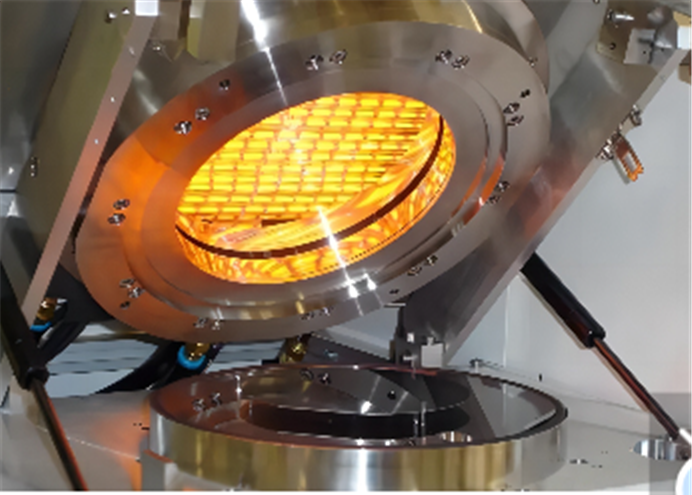
When you’re working in a semiconductor environment, “clean” isn’t just a preference—it’s the whole game. That’s why we use UHP (Ultra High Purity) heater lamps. Here’s the deal: when you’re heating a silicon wafer, you want every single photon hitting that surface. Wasting power by heating up the chamber walls is just throwing money and energy away.
Why we go with gold
You’ll see some people using standard aluminum reflectors, but they soak up too much energy. We use gold-coated reflectors instead. It’s not about making the equipment look fancy. It’s about the physics of infrared light. Gold is incredible at bouncing that energy right back where it belongs—onto the wafer. Instead of your heat bleeding out into the machine frame, the gold coating keeps it focused. You get more heat on the target without having to crank up the power bill.
The tricky parts
To get the heat density you need, these lamps have to run hot. Really hot. But that comes with a catch. All that power creates intense local heat. If your cooling system can’t keep up with the rise in ambient temperature, you’re looking at burnt-out lamp ends or a fried socket. It’s a headache you don’t want. We spend a lot of time obsessing over the quartz emissivity and that gold layer. The tighter the focus, the steeper the temperature gradient. You’ll want to be really careful with your PID controllers here—one wrong move and you’ve got hot spots on your wafer.
Real-world setup
Once you’re actually on the floor wiring these into a UHP system, alignment is everything. Seriously. If you’re off by just a few millimeters, your thermal efficiency can tank by 10% or 15%. We designed these with a precise footprint so you can just drop them in without having to tear apart your entire heating array. One last thing: keep that gold surface spotless. A little bit of dust or some oxidation might not seem like much, but it’ll kill your radiative gain pretty quickly.