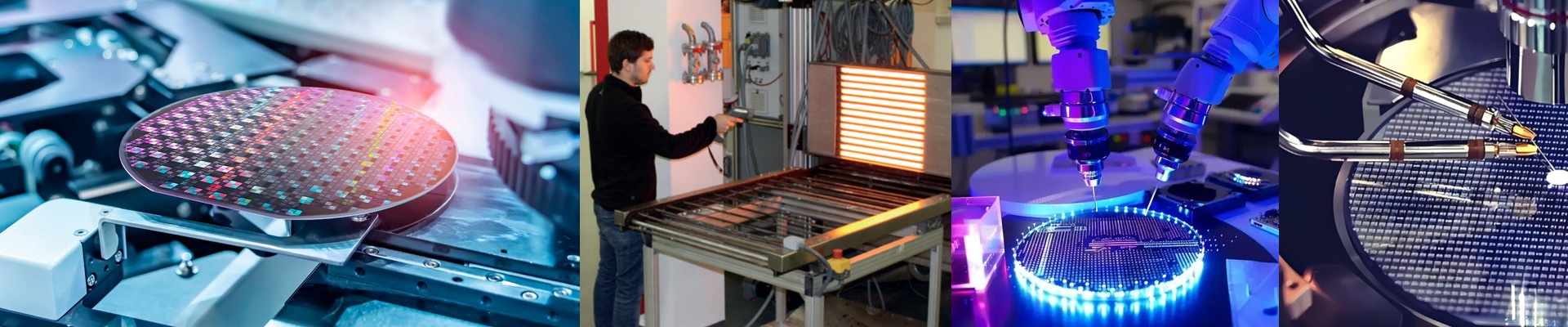
Stop Your Infrared Lamps From Ruining Your Wafers
If you’ve ever had an infrared lamp burst during a high-load production run, you know it’s a total nightmare. It’s not just about the downtime. When a quartz tube goes, it basically turns into a glass grenade. You end up with shards and metallic bits scattered everywhere, which means your expensive wafers are contaminated and your batch is headed for the scrap bin. It’s a mess. We build our wafer heaters specifically to make sure that doesn’t happen.
Dealing with Thermal Stress
Most of the time, lamps pop because of electrical spikes or uneven thermal expansion. To fight this, we use high-purity synthetic quartz. It’s tough. It can handle the stress of jumping from cold to scorching hot—and back again—without cracking. We also obsess over the filament centering. If it’s off by even a tiny bit, you get “hot spots.” Those are the killers. One more thing: keep a close eye on your power supply. If your voltage starts bouncing around, your filament is going to burn out way sooner than it should. We usually suggest pairing these heaters with precise PID controllers. It keeps things steady so you don’t overshoot your target temp.
Keeping the Junk Out
To make sure glass particles never even get close to your wafer, we use a double-layer defense. We usually tuck the lamps inside a reinforced quartz sleeve or a containment shield. Think of it as a safety net. If a tube does pop, the shield catches the debris before it becomes a disaster. And we don’t cut corners on the seals. We use specialized end-caps to keep halogen gas from leaking out. This keeps the chemistry inside the lamp stable and helps it last longer. Also, you’ll notice we don’t use those cheap adhesives. At high temperatures, those things “outgas,” leaving a foggy residue on your wafers that ruins thin-film deposition. Not a good look.
The Trade-offs
Here is the catch: high-density infrared heaters are great for fast ramp rates, but they put off a ton of ambient heat. You have to get your cooling fans and heat sinks right. If the housing gets too hot, your mounting brackets can actually warp. Once that happens, your focal point shifts, and suddenly you’ve got uneven heating across the wafer. It’s all about balance.