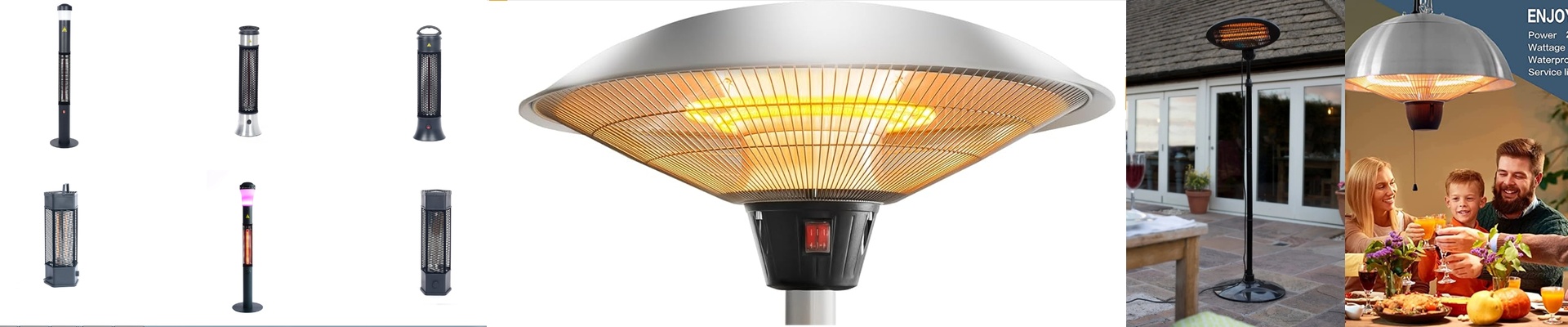
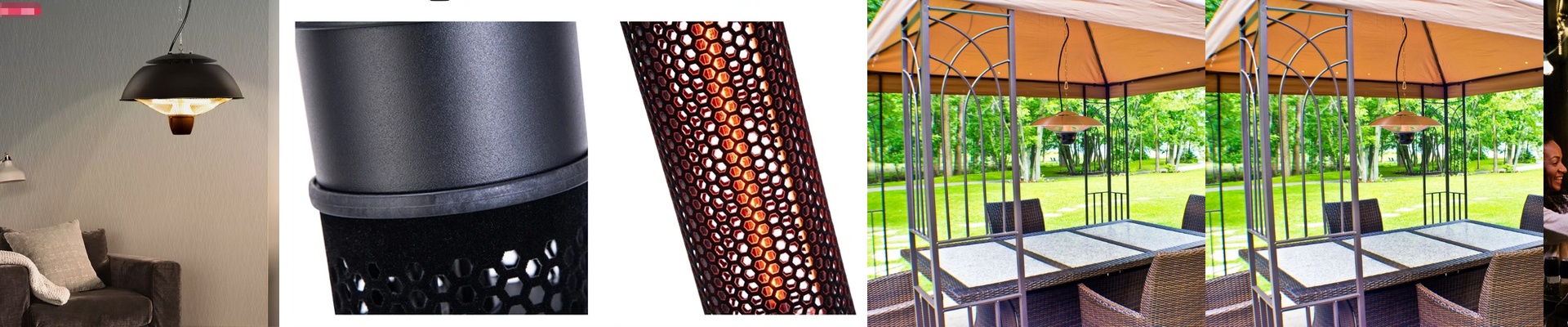
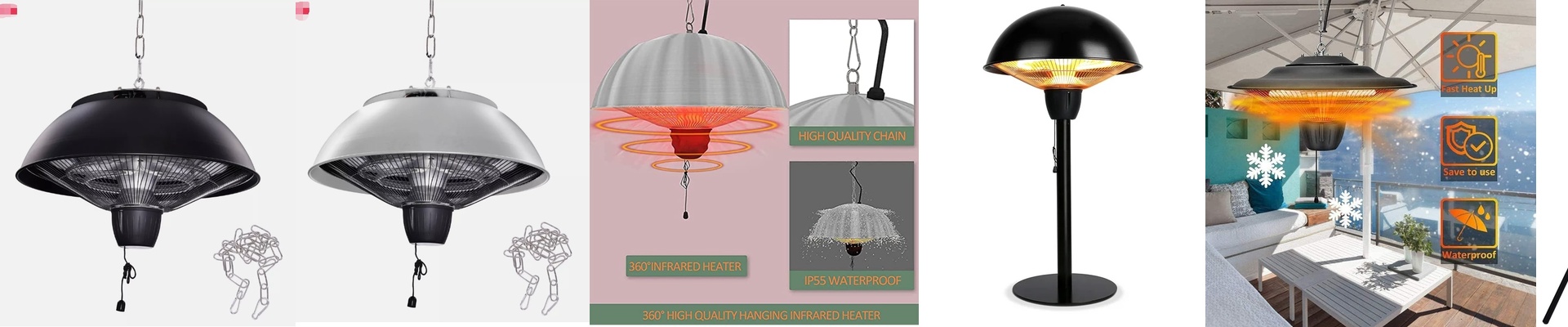
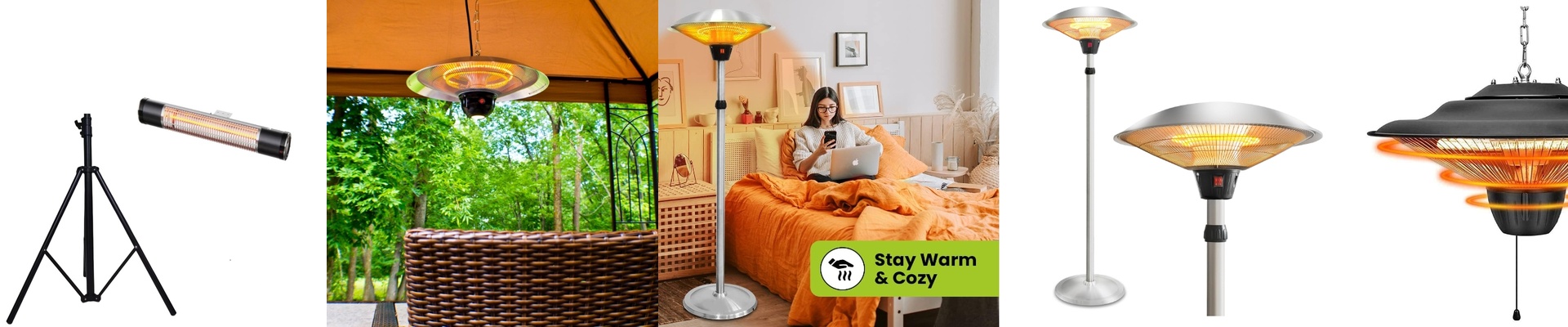

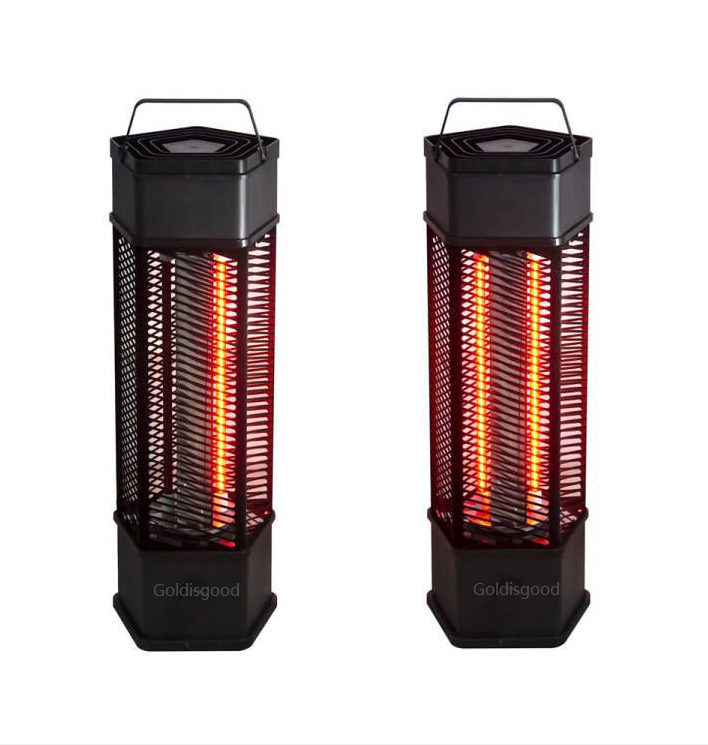
How much can a fully electric infrared heater actually save compared to an old electric oil-filled radiator, while still keeping you comfortable? The truth shows up on your bill. Infrared warmth goes straight to people and surfaces, so you don’t have to superheat the air just to feel cozy. Run them side by side, and a dimmable infrared patio heater often hits the same comfort level with noticeably less energy draw. That’s because it sidesteps the constant heat-up and cool-down cycling that bleeds electricity.
What matters under the hood
We built this dimmable patio heater around a carbon fiber infrared element—chosen for quick response and long life. The radiant heat leaves the element immediately, warming you first, then the surroundings. It runs on standard 120V household power and plugs into a common outlet, with an adjustable thermostat to hold your comfort level. The dimming control lets you trim the output instead of running wide open all evening. For outdoor use, look for an IP rating that confirms the electronics are protected against rain and splash. And don’t overlook basics: tip-over protection and a protective grill.
Why this approach works outdoors
On a patio, deck, or covered porch, comfort comes down to steady warmth, not a blast of hot air. Infrared holds up better when there’s a breeze, and the dimmable setting keeps the intensity right for conversation, dinner, or reading. Because the heater warms objects and people directly, you can keep the ambient temperature a touch lower and still feel comfortable. That difference can translate into real savings compared with electric oil-filled heaters that spend energy heating air that just escapes. You also get faster comfort. Flip it on and you feel warmth in moments—no waiting around for a heavy element to come up to temperature.
The details that make the difference
Infrared heat performs best in open or semi-open spaces that get some shelter from strong wind. For the best results, position the heater so the beam covers the seating area, and keep the unit away from combustible materials. It’s designed for outdoor use, but it still prefers dry conditions. When the weather turns severe, cover it or store it. Expect the warmth to be strongest within the direct path. People at the edges will feel less intensity—that’s normal for radiant heat.