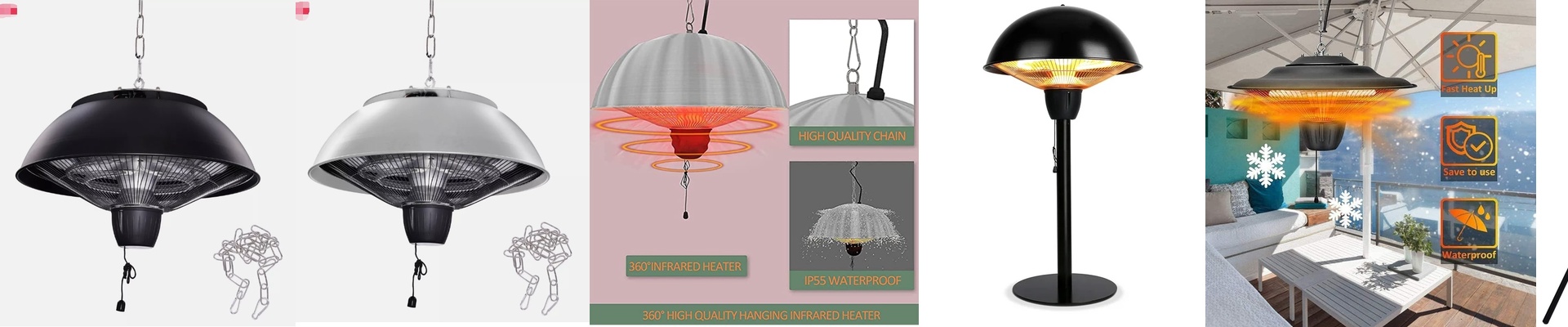
Why Bathroom Heaters Usually Die (And How We Fixed Ours)
Let’s be honest: bathrooms are a nightmare for electronics. You’ve got steam everywhere, random splashes of water, and high humidity. Most infrared lamps just can’t handle it. They short out or the glass just gives up, and suddenly you’re shivering in a cold bathroom again. We wanted to stop that from happening.
The battle against water
Here is the problem: when a tiny drop of water hits a quartz tube that’s glowing at 500°C, it’s a disaster. The glass shrinks unevenly and develops these tiny micro-cracks. It’s called thermal shock, and it’s a quick way to kill a heater. To fix this, we wrapped everything in a splash-proof housing. It keeps the water away from the electrical terminals so you don’t get that nasty “arc-over” where moisture turns into a bridge for electricity to go where it shouldn’t.
No more foggy lenses
You know that annoying fog that builds up on the glass? It’s not just ugly—it actually blocks the heat. The condensation scatters the infrared rays, so you aren’t feeling nearly as much warmth. We added a hydrophobic coating to the outer lens. Basically, it makes water bead up and roll right off instead of sticking. The path stays clear, and the heat hits you exactly where it should.
A quick heads-up on installation
Now, there is one trade-off. Because we sealed these units so tightly to keep the water out, they trap heat inside. If you cram one of these into a tiny ceiling void with zero airflow, the internal driver is going to bake. Just make sure there’s a little bit of breathing room around the unit so the circuit board doesn’t overheat.
Built to actually last
By keeping the steam away from the halogen tube, we stop the internal electrodes from rusting or oxidizing. The result? The heater doesn’t lose its punch over time. It takes a beating from the humidity every single day, but the core heating element stays bone-dry and keeps pumping out a steady, warm glow.