
Why Your Heater’s Wiring Is Probably Its Weakest Link
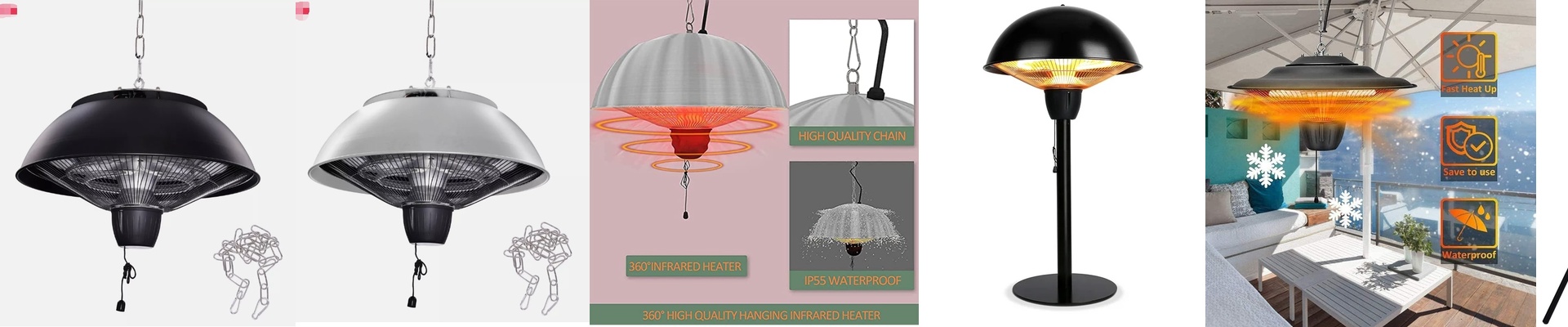
If you’ve ever dealt with ceiling-mounted infrared heaters, you know they live in a brutal environment. They’re constantly fighting thermal stress. The real trouble spot? Right where the electrical lead-wire hits the heating element. That junction is where things usually go south. If that seal gives out, oxygen and moisture sneak in, start eating away at the metal, and—boom—you’ve got a short circuit.
The slow burn of “aging”
Most basic heaters rely on cheap silicone or some generic adhesive. The problem is that these materials just can’t handle the heat. Over time, they break down. We call it “aging,” but really, the insulation just gets brittle and starts to crack. Once those cracks open up, high-voltage current can arc. When that happens in a ceiling installation, you’re not just looking at a broken part. You’re looking at a potential fire. That’s a nightmare nobody wants on their hands.
The difference between “cheap” and “built to last”
A lot of generic heaters just use a dip-coating process. It’s fast, but it’s flimsy. We do things differently. We use a multi-stage vacuum sealing process, mixing in high-temperature ceramic beads and specialized glass-frit seals. It basically wraps the lead-wire in a hermetic shell. It keeps the oxidation out and keeps the connection rock solid. You can actually see the difference if you look closely. Our seals are flush and smooth. The cheap stuff? You’ll see bubbles or uneven clumps. Those little imperfections are exactly where the seal will snap the first time the metal expands from the heat.
A quick word of caution
Here’s the trade-off: better sealing makes the lead-wire a bit stiffer. Because of that, you can’t just bend these wires into a sharp angle during install. If you force a tight curve, you’ll crack that seal you just paid for. Just give the wires a little room to breathe. We build these to survive in gritty industrial spaces. Proper sealing means you aren’t replacing a whole unit just because a wire failed. And trust me, if you’re installing these in a high-ceiling zone where you’d need a massive lift just to reach them, you’ll want the OEM specs. It saves you a huge headache down the road.