
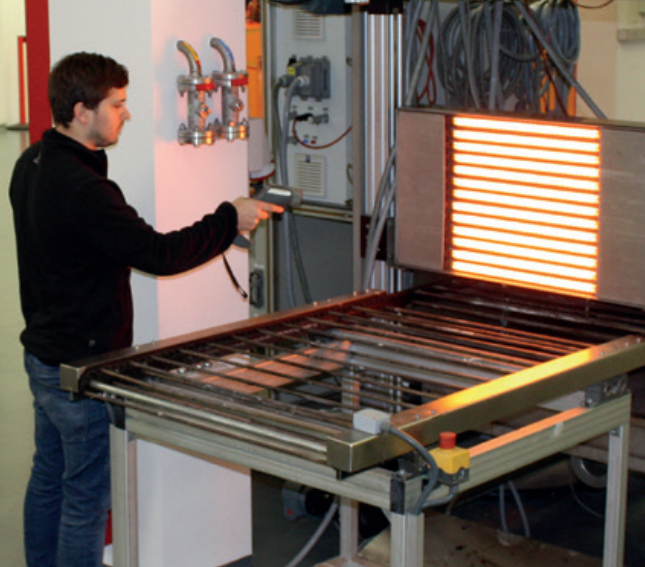
Dealing with Fire Risks in Chemical Cleaning Zones
When you’re upgrading a fab clean room, the chemical cleaning stages can get sketchy. You’re dealing with flammable solvents, and if you just toss in a standard infrared lamp, you’re basically inviting a fire to start. It’s a huge risk. That’s why we build our IR heating arrays with a specific kind of encapsulation—basically a protective shell that keeps things from blowing up.
How the protection actually works
We don’t just throw a wrapper around the lamp and call it a day. We use a sealed quartz envelope tucked inside heavy-duty industrial housings. The goal here is simple: keep the electrical terminals and the heating element completely away from the air. If solvent vapors can’t touch the hot surfaces or hit an electrical arc, you don’t have a fire. We also use reinforced seals and flame-retardant gaskets to make sure everything inside stays exactly where it belongs.
Standing up to the chemicals
Let’s be honest: chemical fumes are brutal. They eat through standard materials for breakfast. To stop that from happening, we use corrosion-resistant alloys and special coatings. We want housings that won’t pit or degrade, even when they’re bathing in acidic or alkaline vapors. We also put the seals through the wringer to make sure they don’t shrink or crack after a few months of hard use. Then there’s the heat. We calibrate the elements to stay steady. If a lamp spikes too hot, it puts way too much stress on those seals. We balance the wattage and the surface area so the outer shell stays at a safe temperature for your specific zone.
The trade-offs you should know about
Nothing is perfect. This kind of protection adds some bulk. The encapsulation makes the heater larger, sodouble-check your machine’s clearancebefore you try to swap these in. You don’t want to find out they don’t fit after they’ve arrived. Also, since the lamp isn’t “naked,” the housing blocks a little bit of that IR radiation. You might notice it takes a bit longer to heat up, or you might need to bump up the power to hit your target temp. One last thing: check your airflow. You want to make sure the housing isn’t accidentally creating pockets of stagnant heat.