

Cutting Carbon and Heat Waste in Biosensor Fabrication
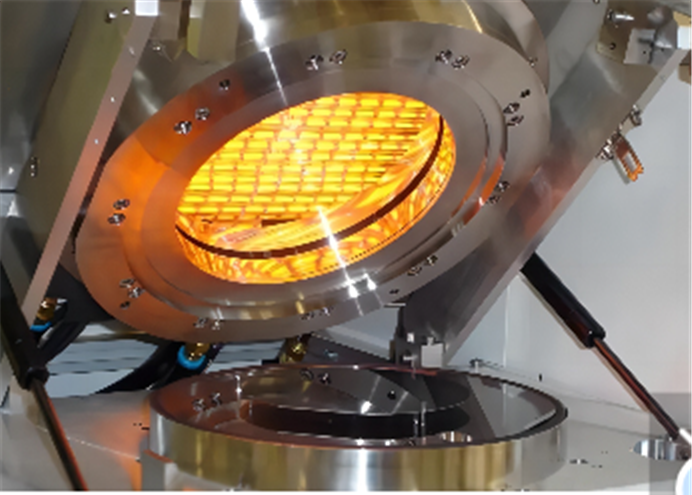
When you’re making biosensors, getting the temperature exactly right during curing and baking is everything. But let’s be honest: traditional convection ovens are a bit of a nightmare for energy. They waste so much power just heating up the air in the entire chamber before the actual part even feels the warmth. We’ve found a better way. Instead of heating the room, we use targeted infrared (IR) lamps to hit the wafer or substrate directly. It’s a simple shift, but it makes a huge difference in the energy footprint of a cleanroom.
Getting the Power Right
The real trick here is the ramp-up speed. If you’re doing Rapid Thermal Processing (RTP), you need a lot of punch in a small area. We lean on short-wave IR because it digs deeper into the substrate and works way faster than long-wave options.**It’s fast. Really fast.**And that changes your whole cycle time. Since the machine isn’t humming along for hours, it draws way less power per unit. One practical tip: we usually match the lamp voltage to whatever your plant is already running. Nobody wants to deal with the headache of adding heavy transformers if they don’t have to. Just a heads-up—if you’re running a high-throughput line with a dense array of these lamps, they get hot. Like, really hot. Make sure your cooling manifold is up to the task, or you’ll see your temperature setpoints start to drift.
Keeping it Clean
In a cleanroom, a tiny bit of contamination can ruin everything. That’s why we use high-purity quartz envelopes. No outgassing, no surprises. We also use specialized coatings on the lamps. This lets us tweak the emission spectrum so the energy hits the specific absorption band of your sensor material. It’s about precision, not just raw heat. And because we use standardized connectors, these are just drop-in replacements. You can swap them out without having to rewire the whole rack, which means your line stays moving.
The Bottom Line on Carbon
Here’s the best part: moving from forced-air to IR just stops the waste. You aren’t paying to heat air that doesn’t need to be hot. We’re seeing a direct drop in kWh per wafer. If you’re under pressure to hit “Green Factory” targets but you can’t afford to redesign your entire fabrication flow, this is the way to do it. It’s a straightforward hardware swap that actually moves the needle on your carbon footprint.