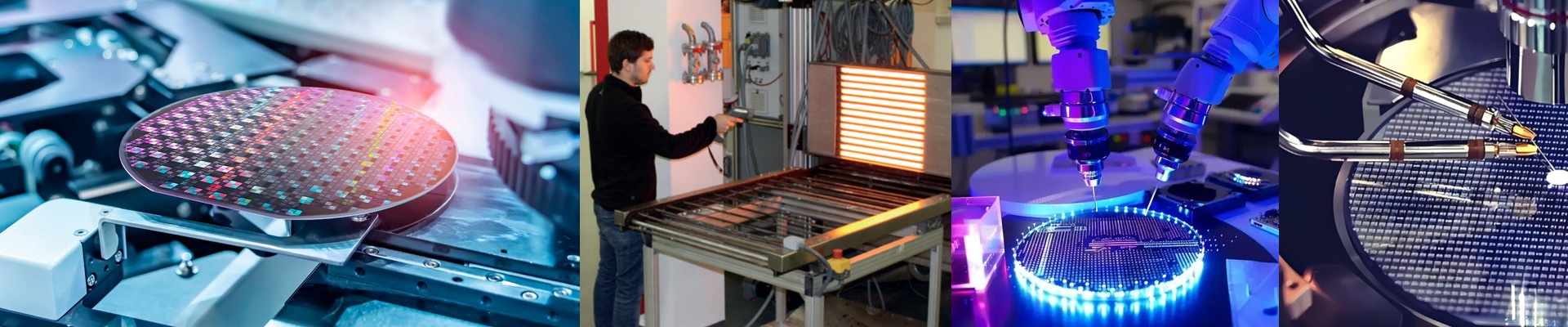
On the lithography floor, you know how it goes: a wafer dryer lamp drifting even 0.2°C can shove critical dimension bias right outside spec. Soft bake and hard bake aren’t just thermal formalities—they set solvent removal, polymer crosslink, and line-width control. When the lamp starts to wobble, yield slips away before you even see it.
What matters under the hood
We spec these replacement bulbs for halogen short-wave output, matched to quartz envelopes so they respond fast and hold stable spectral output. Across the bake face, wafer-level uniformity stays within ±0.1°C, which protects photoresist thermal budget and keeps the process repeatable. The lamp is cleanroom-compatible from Class 1 to Class 100, with zero particle generation at the bake zone and a sealed termination that keeps outgassing out. Power draw is tuned to match the dryer’s thermal load without overshoot, and the filament geometry is built for 24/7 operation—output drift stays below 5% over 5,000 hours.
Why this holds up in production
In the fab, the dryer has to hit the same temperature profile run after run. These bulbs deliver that consistency, so soft bake solvent removal and hard bake crosslink happen predictably—fewer CD excursions, less rework. Reliability means fewer unplanned stops, stable throughput, and maintenance windows you can plan around. The payoff is fewer scrapped lots and a tighter thermal control loop in your lithography cluster.
Field notes for the swap
Installation comes down to matching base type, voltage tolerance, and connector orientation to the dryer model. If the socket doesn’t line up, thermal coupling changes and life takes a hit. On the first install, verify lamp alignment and contact pressure, then confirm the dryer’s calibration curve after the swap so repeatability stays intact. In Class 100 or better, stick to ESD-safe handling to keep particle counts flat.